
Why Google Cloud Multiplies Your Composable CDP Effectiveness
Run your CDP inside Google Cloud and turn your existing data stack into a real-time customer intelligence engine.
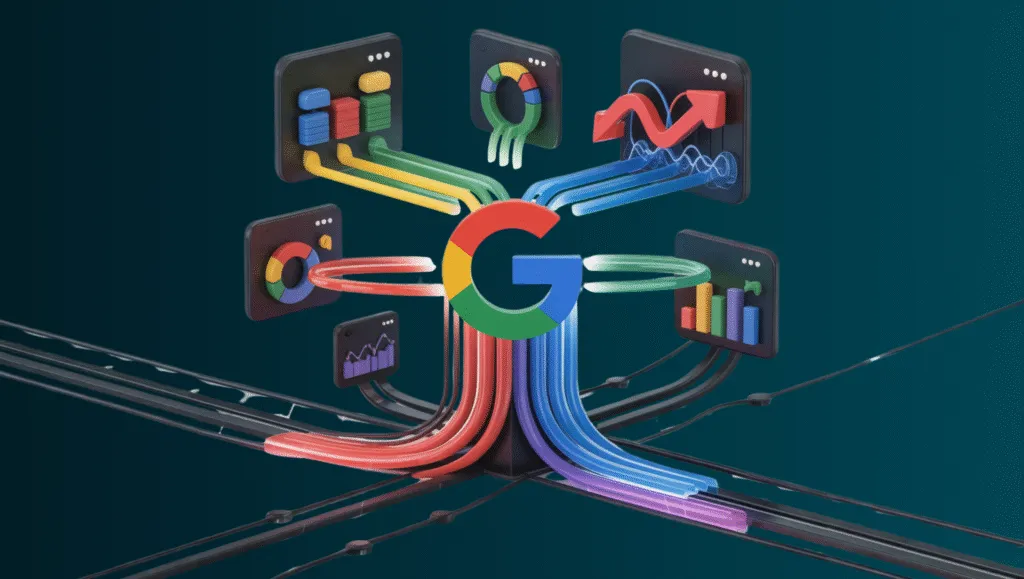
Many enterprises already rely on Google Cloud Platform (GCP) for analytics, AI, or data warehousing. Comparatively few, however, are tapping its full potential for real-time customer intelligence by running a composable Customer Data Platform (CDP) natively within the Google ecosystem. It’s a little bit like installing solar panels on your roof only to sell that energy back to the grid and then continuing to draw power from the mains.
By deploying your CDP inside your own Google Cloud environment, every process – from data modeling to activation – runs within the same governed environment. You eliminate external friction, reduce latency, and gain total visibility and control over your data. It’s the equivalent of directly using the solar energy produced by your roof panels to power the appliances in your kitchen. You already have the power; why not use it directly? If maximum efficiency is one of your goals, this is the way to achieve it.
The Power of Staying Inside Your Cloud
When you deploy your CDP inside your GCP, you benefit from a zero-copy architecture: your data stays in your environment; you use your existing Identity & Access Management (IAM); Virtual Private Cloud (VPC); and governance policies; and you avoid moving data into third-party SaaS systems. As we’ve noted before: the difference between using a packaged CDP on GCP (which forces you to move your data into a vendor’s system) and a composable CDP, is that a composable CDP lives directly in your environment.
The implications are tangible: faster queries, no expensive egress fees, consistent governance controls, and fewer data silos. For example, one leading UK electronics retailer that implemented Syntasa’s composable CDP in its GCP environment achieved a £23 million uplift in 2024 and £45 million+ revenue from cart-abandonment campaigns thanks to real-time behavioral triggers.
By staying inside your cloud, you also align your entire data-to-activation pipeline under your own security regime, thereby keeping compliance teams happy – never a bad idea.
Activate Google Cloud’s Native Muscles
Critically, it is important to understand that Google Cloud is far more than a simple storage platform. GCP is a full stack of services just waiting to be plugged into your composable CDP. Let’s break down the main components and how they amplify CDP effectiveness:
BigQuery – a unified data foundation
With BigQuery you store behavior, transaction, call-center, and other data in one serverless, petabyte-scale warehouse. It runs identity stitching, audience segmentation, and customer scoring directly in BigQuery, with no exports or data duplication.
Vertex AI – produce smarter predictions
With Vertex AI (Google’s managed machine learning platform), you can feed unified customer profiles into churn-prediction, next-best-action, or product-affinity models. This integration is crucial to enabling activation workflows inside the CDP stack.
Pub/Sub – get real-time streaming
You can stream events from web, mobile, or CRM systems via Pub/Sub into your warehouse, enabling second-by-second updates. The result? Cart abandonment nudges or behavior-triggered offers can fire in-session (not hours later).
Ads Data Hub – closed-loop activation
Activation and measurement live inside your cloud: segment audiences; push to Google Ads platforms; and measure response with minimal data movement. Native integration means faster insights and full data ownership.
And happily for those who fear being straightjacketed by vendor lock-in, each of these services is flexible: you turn them on when you need them. The outcome is a composable CDP that is not bolted on, but built into your cloud architecture.
How It Works in Practice
| Use Case | Google Cloud Component | Outcome |
|---|---|---|
| Cart Abandonment Recovery | BigQuery + Vertex AI | Real-time predictions fire offers mid-session |
| Cross-Channel Identity Graph | Pub/Sub + BigQuery | Device and account stitching occurs within seconds |
| Campaign Measurement | Ads Data Hub | Closed-loop attribution from your first-party data |
| AI-Driven Personalization | Vertex AI + Looker | Recommendations served instantly and at scale |
Governance, Cost, and Scale Advantages
- Governance: One IAM policy governs both data and activation workflows. When your CDP lives on Google Cloud, your existing identity and audit controls apply end-to-end.
- Cost Efficiency: Because there is no data movement out of your environment, you avoid egress fees and duplication costs. Businesses pay only for what they need, without vendor markup on storage or compute.
- Scale: BigQuery and Vertex AI scale seamlessly to petabyte-level workloads. The warehouse-native CDP approach enables enterprise-scale data volumes without typical SaaS caps or batch delays.
- Compliance: Google Cloud’s certifications (SOC 2, GDPR, HIPAA) combine with your enterprise policies. A composable CDP inside GCP retains control and transparency of your data access and flows.
Running your CDP inside Google Cloud means efficiency isn’t theoretical – it’s built in. Because data never leaves your environment, every watt of compute goes toward insight, not transit. Think of the solar panels: you generate, consume, and optimize within one sustainable system.
The Roadmap to Value
Syntasa platform makes it easier and faster to leverage these Google products and amplify your DCP. Here’s a practical path for data engineers, solution architects, and marketing technologists to get the most value from this integration:
- Step 1: Connect your existing Google Cloud datasets into Syntasa modules: Data Ready → CDP Core → AI → Audiences.
- Step 2: Define segmentation or modeling workflows inside BigQuery using SQL or notebooks.
- Step 3: Build and deploy your Vertex AI models (e.g., propensity to buy, churn risk) and push predictions back into the activation layer.
- Step 4: Activate audiences and campaigns via Pub/Sub, Google Ads, and your CRM. Measure outcomes inside Ads Data Hub or Looker dashboards.
- Step 5: Iterate and scale: plug in advanced services only when ready, without rebuilding the stack.
All of this happens with one composable stack, no external data hops, and everything governed inside your Google Cloud environment.
Conclusion
Google Cloud is not just infrastructure – and the sooner you can start thinking of it as a multiplier for your composable CDP, the better. When the platform, the data, and the activation logic live in the same ecosystem, speed meets security, and every prediction becomes actionable.
So if you’re running on Google Cloud today and evaluating CDP strategies, the message is clear: Stay inside your cloud. Build a composable CDP. Activate your data in real time.
See how Syntasa’s Composable CDP runs natively inside your Google Cloud project and turns your CDP investment into a performance engine. Schedule a technical walkthrough today.
FAQs
How does running a composable CDP inside my own Google Cloud project improve day-to-day decision-making for marketing and data teams?
Because the CDP runs directly in BigQuery, Vertex AI, Pub/Sub, and Ads Data Hub, teams work with a single, fully visible data environment instead of coordinating across a vendor’s separate system. Segmentation, predictions, and activation all happen where the data already lives, so decisions can be made and acted on immediately rather than waiting on exports or syncs.
What real performance gains should teams expect when activation, analytics, and modeling all live inside BigQuery and Vertex AI?
Teams see faster queries since there’s no data movement between systems, real-time triggers like cart-abandonment nudges firing in-session rather than hours later, and AI workflows that move from Vertex AI model training straight into production activation without a separate deployment step.
How does a zero-copy CDP architecture reduce costs without cutting back on use cases or data volume?
Because data never leaves the customer’s Google Cloud environment, there are no egress fees or duplicate storage costs, and no vendor markup on top of BigQuery and Vertex AI compute. Businesses pay only for the cloud resources they use, without the volume-based pricing tiers or data caps that come with packaged SaaS CDPs.
What changes for engineering teams when identity stitching, segmentation, and AI models run natively in GCP instead of external SaaS tools?
Engineering teams maintain far fewer pipelines, since there’s no need to sync data out to a separate CDP and back. That also removes a common source of integration conflicts between systems, and keeps identity, segmentation, and modeling under one IAM and governance policy instead of reconciling access controls across multiple platforms.
How does keeping CDP, AI, and activation inside Google Cloud strengthen compliance and security for enterprises operating at scale?
Keeping the CDP inside Google Cloud means it inherits the same IAM policies, VPC boundaries, and audit trails already governing the rest of the enterprise’s data — plus Google Cloud’s own SOC 2, GDPR, and HIPAA certifications. There’s no separate vendor security posture to evaluate, since data access and flows never leave the customer’s existing compliance perimeter.