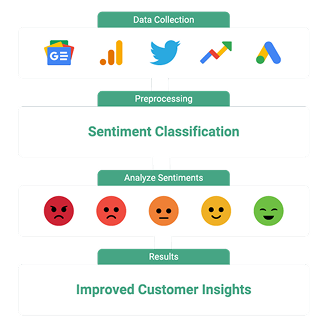
Behavioral Sentiment Analytics leverages the power of the cloud and the latest advances in AI
Tap unused sources of digital behavior to better understand community needs and attitudes and drive better outcomes.
Trusted By Global Brands and Governments
Why Real-Time Sentiment?
Surveys are not enough.
Relying solely on surveys to determine your community’s needs creates an incomplete picture.
Selection Bias
→ Responders may not be representative of general public.
→ Limited to people who are visiting your site.
You’re not hearing from everyone.
Ensuring Integrity
→ Responses do not reflect true beliefs, due to social pressure.
( e.g., racism, sexism, political views )
They’re not telling you their true feelings.
Snapshot
→ Polls are conducted at a point in time.
→ Requires expensive longitudinal studies.
Attitudes change and shift over time.
Why Choose Syntasa’s Sentiment Analytics?
Digital Behavior Expertise
Syntasa carries deep expertise in digital behavior to provide crucial insights into public sentiment.
Diverse Data Integration
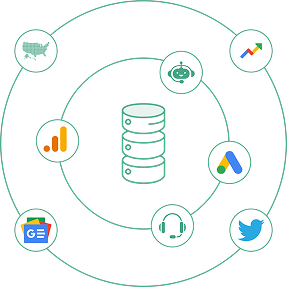
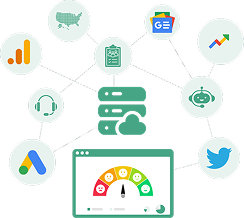
Data from a wide range of sources, including social media, community surveys, news articles, search insights, call center transcripts and chatbot conversations, offers a holistic understanding of community sentiments.
Analytics Teams
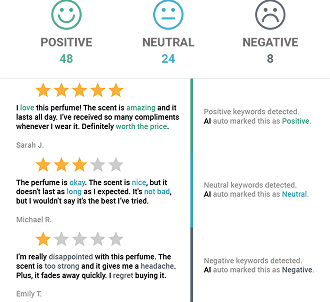
Advanced AI and NLP algorithms continually update data sources to provide accurate, real-time sentiment trends.
Connect behavior with outcomes
Provide comprehensive insights into behavior from news, social, and surveys — and connect with the outcomes that matter most in your community.
Sentiment Insight Across Use-Cases
- Pharmaceutical Recall
Understanding side effects and other narratives related to recalled drugs
How Does Sentiment Analytics Work?
Diverse Data Integration
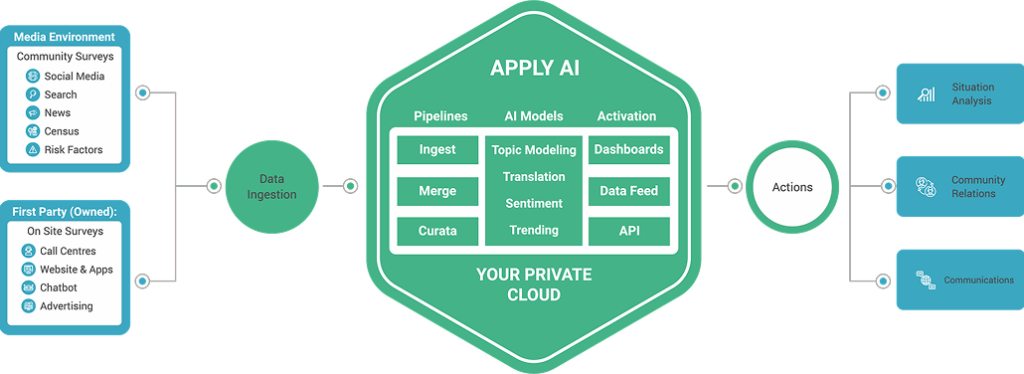
Bring data from multiple sources like community surveys, search, social media, news, census, on-site surveys, call centers, website, apps, chat bot, ads etc together for analysis.
Apply AI
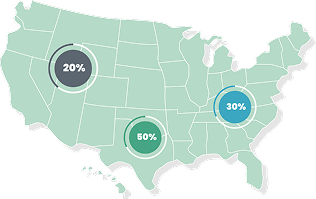
Precision targeting with geo-opportunity models.
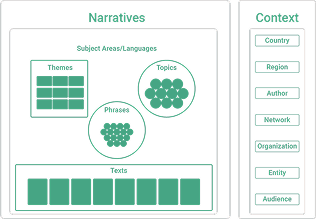
Continually update data sources, apply automated NLP algorithms and topic models to show trends.
Action
Bring data from multiple sources like community surveys, search, social media, news, census, on-site surveys, call centers, website, apps, chat bot, ads etc together for analysis.
Automatically identify authors / influencers and amplification of favorable and unfavorable narratives.
Get Results in Weeks
Week 1-4
Configure integrations
- News and social media
- Search
- Surveys
- Demographics and socioeconomics
Week 5-8
Sentiment Modeling
- Deploy geoanalytics model
- Tune narratives model
- Create analytics frameworks for various cohorts
Week 9-12
Deliverables
- Sentiment dashboard
- Narrative dashboard
- Address questions related to attitudes, perceptions, and narratives
What Users Are Saying
Our vision is to build the digital infrastructure, with the World Health Organisation, to enable the collaboration of international, national and local partners, including in vulnerable countries to promote vaccine confidence.
Gerald Mullally
Former Director, Government Communication Service International
Trusted by Public Sector Leaders
300% Increase in Engagement:
Created sentiment-driven audiences for communications outreach in California. Developed first-party digital advertising audiences for the CalFresh program, resulting in a 300% boost in engagement during the pandemic.
98% of Duplicate Comments Removed.
Identified and eliminated exact and near-duplicate comments, removing 98% from review. This ensured that regulatory decision-making accurately reflected the voices of all stakeholders.
Centralized Reporting & Behavioral Analysis:
Analyzed the digital behavior of those seeking care for Opioid Use Disorders in Arizona. Provided a centralized repository, improving capacity and availability reporting for treatment providers.
6-Week MVP Delivery:
Boosting Global Vaccine Confidence Delivered a Minimum Viable Product (MVP) in just 6 weeks to support the UK’s G7 presidency. This initiative, now continued by WHO for global collaboration, defined cohorts for undecided individuals, vaccine acceptors, and vaccine rejectors.